

From Boston rock bands to Chicago blues
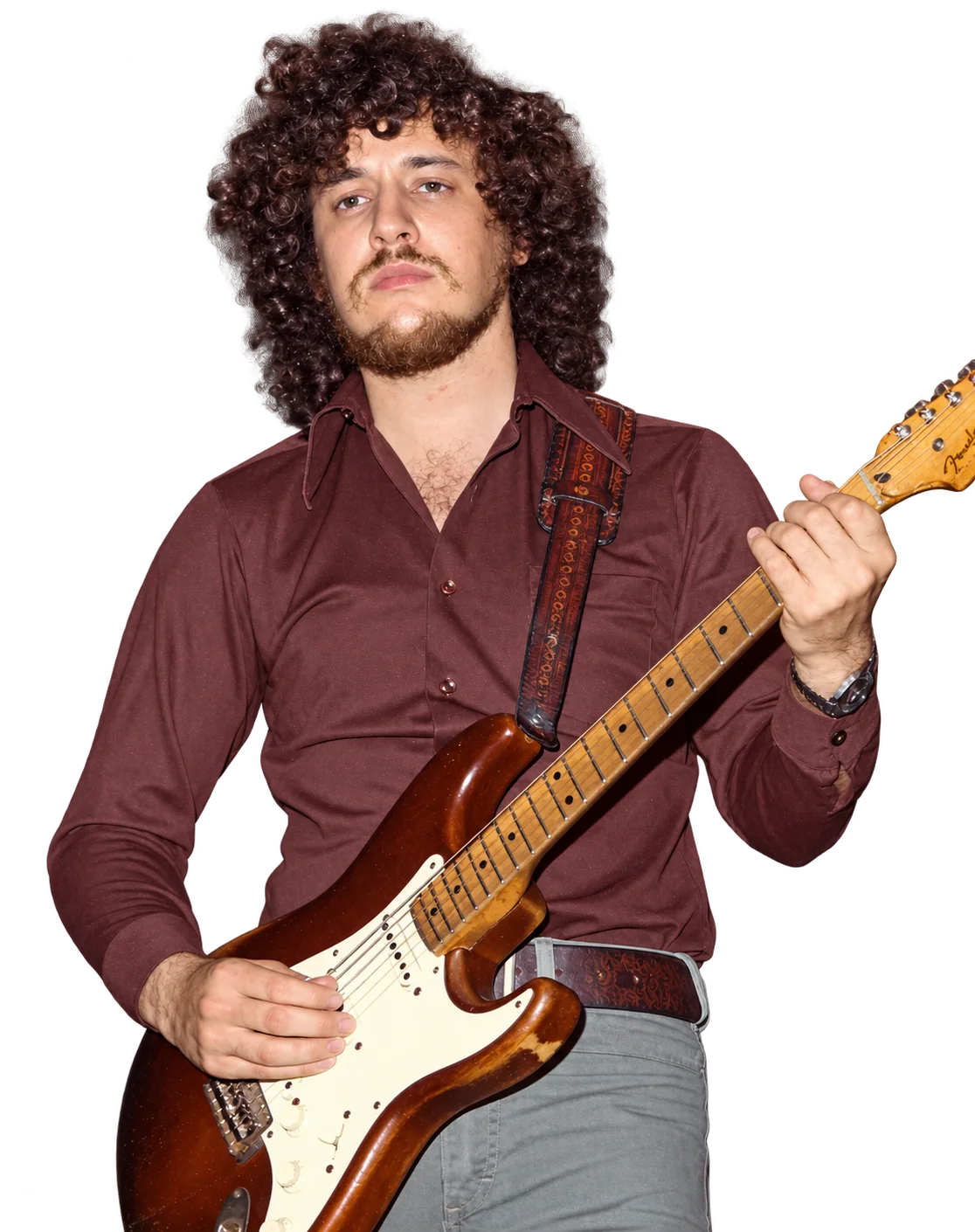
Born in 1949 and raised in the Boston area, Bob Margolin began playing guitar in 1964. Chuck Berry supplied the initial spark: the rhythmic drive and guitar language of rock and roll led him backward toward Berry’s own influences, particularly Muddy Waters. Margolin played in local rock and blues groups while learning how the older music worked. His early recording experience included the Boston psychedelic group the Freeborne and its album Peak Impressions, an unusual beginning for a musician whose later career would become closely associated with traditional electric blues.
Boston offered opportunities to hear touring blues musicians at close range. Margolin watched Waters at clubs such as Paul’s Mall and the Jazz Workshop, and bands he played with opened shows for him. He also worked with Luther “Georgia Boy” Johnson. These encounters mattered because the style he wanted to learn depended on phrasing, rhythmic placement, and interaction that were easier to understand beside a working band than from a guitar part considered in isolation. Waters noticed his interest and encouraged him.
Seven years beside Muddy Waters
In August 1973, Margolin went to hear Waters in Boston and learned that guitarist Sammy Lawhorn had just left the band. Waters asked him to bring a guitar to his hotel the following day; the invitation became a job. Onstage, Waters placed him nearby so that he could watch his hands and respond to his timing. Margolin’s role required close attention to the singer’s elastic phrasing and to the spaces between vocal lines. The education was practical and nightly, with the demands of the song taking precedence over a sideman’s desire to display technique.
The job also brought unusually varied recording opportunities. Margolin played on The Muddy Waters Woodstock Album, released in 1975, alongside musicians including Paul Butterfield, Levon Helm, and Garth Hudson. He subsequently appeared on Waters’ four Johnny Winter-produced Blue Sky albums and on Winter’s Nothin’ But the Blues. At the Band’s farewell concert in San Francisco in 1976, he stood beside Waters for “Mannish Boy.” Martin Scorsese’s film The Last Waltz made that performance one of the most widely seen appearances of both musicians.
Building an independent career
Margolin left Waters in 1980 and formed his own band. He lived in Washington, D.C., and Blacksburg, Virginia, before settling in North Carolina in 1989. Much of that decade was spent playing clubs throughout Virginia and North Carolina. Those years gave him room to develop a repertoire and a bandleading identity outside the structure of Waters’ group. He has described the freedom of working regularly without initially feeling compelled to release records or shape his performances around commercial expectations.
By the end of the decade, recording had become a way to reconnect with a wider audience. The Old School and Chicago Blues appeared on Tom Principato’s Powerhouse label before Margolin joined Alligator Records. Down in the Alley arrived in 1993, followed by My Blues and My Guitar in 1995 and Up & In in 1997. The Alligator records expanded the range of his public identity: he was a songwriter and singer as well as the guitarist audiences remembered from Waters’ band. Extensive festival and international work followed.
Songs, collaborations, and a broader guitar vocabulary
Up & In makes the breadth of Margolin’s interests especially clear. Its program includes eleven originals among fourteen selections, with music ranging from Chicago blues to Chuck Berry-shaped rock and roll, swing, and a version of “Imagination.” Guests include Pinetop Perkins, David Maxwell, Kaz Kazanoff, Tad Walters, and Sweet Betty. The album’s mixture helps explain his guitar style: slide remains central, but so do sharply articulated single-note lines, rhythmic chords, and the buoyancy of swing. His rough vocal sound belongs inside those arrangements rather than sitting apart from them.
He continued to reunite with Waters’ former musicians while pursuing his own recordings. The Muddy Waters Tribute Band toured on a package with B.B. King, Dr. John, and Little Feat in 1994 and made You’re Gonna Miss Me, a Tribute to Muddy Waters. Other releases included Hold Me to It and The Bob Margolin All-Star Blues Jam. His production work reached artists including Big Bill Morganfield, Candye Kane, Pinetop Perkins, Mac Arnold, and Ann Rabson. In each setting, accompanying other people remained a substantial part of his musical life.
Acoustic work, Thanks, and passing the music on
Margolin helped establish the VizzTone Label Group in 2007. His later releases include In North Carolina, Blues Around the World with Mike Sponza, My Road, and a self-titled album. In 2019 he changed the scale of his sound with This Guitar and Tonight, an acoustic collection of original songs prompted in part by a restored 1930s Gibson L-00. Bob Corritore and Jimmy Vivino each guest on a track. The album received the Blues Music Award for Acoustic Blues Album in 2020, recognizing a quieter approach within a career often associated with amplified slide.
So Far, his 2022 album with Corritore, offers another view of that smaller-scale music. Acoustic guitar and harmonica carry much of the exchange, with Jimmy Vivino guesting on two tracks. Margolin originals sit beside songs associated with Waters and Sonny Boy Williamson, and Corritore contributes “Salt River Stomp.” The setting makes the musicians’ phrasing unusually exposed: a response has to work through timing and tone rather than through a larger band arrangement.
Thanks, released in 2023, marked fifty years since Waters hired him. Margolin used the Gibson archtop he had played at The Last Waltz throughout the album, linking new performances to an instrument with a specific working history. Songs associated with Waters and other musicians sit alongside his own writing. He has also taught through instructional recordings and the Pinetop Perkins Foundation’s workshops in Clarksdale, Mississippi. His essays and the collection Steady Rollin’ extend that work into prose, preserving firsthand experiences while explaining the musical choices behind them. Teaching, production, and performance have made his influence tangible beyond his own records.
In 2026, the Blues Foundation inducted Margolin into its Blues Hall of Fame, recognizing a career that had grown from the Waters apprenticeship into recordings, writing, production, and teaching in several different settings.