

From Trinidad through Canada
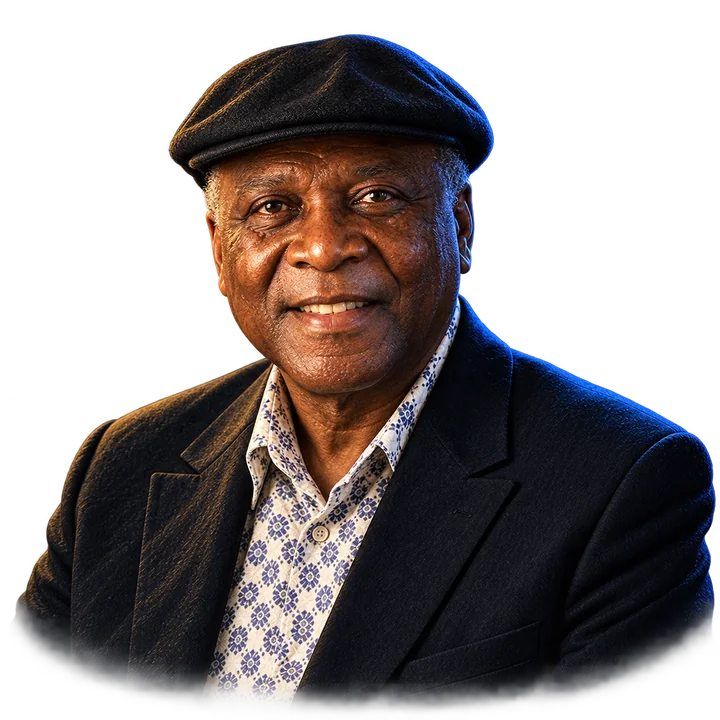
Mervyn H.G. Hinds was born in Trinidad on January 4, 1945. His path into Chicago blues led through Canada, where hearing Sonny Terry made a strong impression on him. Terry’s example offered a model of harmonica playing that could function as a complete expressive voice, with breath, rhythm, and vocal sounds closely connected. That interest eventually became a professional life involving both amplified band work and small acoustic performances.
Hinds lived in Toronto and studied sociology at Carleton University in Ottawa. His musical education also came through informal encounters. He received an early lesson from pianist Lafayette Leake on a Toronto street, and James Cotton encouraged him to visit Chicago. Time in New Orleans brought encouragement from David Lastie and George Porter. These contacts linked his development to musicians in several cities before Chicago became his permanent base.
Theresa’s Lounge and the working band
Hinds performed in the Chicago area from the early 1970s, with Theresa’s Lounge an important home base. He and Junior Wells shared harmonica duties in the club’s house band. The musicians associated with that band included guitarist Sammy Lawhorn, John Primer, bassist Earnest Johnson, drummer Nate Applewhite, and Muddy Waters Jr. It was a setting where accompaniment and familiarity with singers mattered as much as the ability to take a solo.
The Theresa’s experience placed Hinds inside a close musical community whose members continued to work together after individual club engagements ended. His later recording credits include Koko Taylor, Lefty Dizz, Johnny “Big Moose” Walker, Primer, Eddie Taylor Jr., Mud Morganfield, and Willie Buck. Across those jobs, the harmonica could reinforce the rhythm, answer a vocal line, or become the featured voice for an instrumental passage.
Hinds also took part in the New Generation of Chicago Blues presentation at the 1977 Berlin Jazz Festival. It put younger musicians before an international audience alongside a tradition they were still learning firsthand. Later appearances included Burnley in England and the Park Tower Blues Festival in Tokyo. Those engagements developed alongside his continuing work in Chicago, rather than replacing the club circuit on which he had built his skills.
Recordings before a solo catalog
One important session appearance was John Primer’s Stuff You Got to Watch, released by Earwig in 1992. Hinds’s harmonica helped shape Primer’s first American album as a leader. The association connected two musicians who knew the musical expectations of Theresa’s and could draw on that shared experience in a studio setting. His other credits similarly placed him beside singers whose music depended on a responsive ensemble.
Hinds participated in the Black Ensemble Theater production Muddy Waters, Hoochie Coochie Man and appeared on the associated recording. His work with Walker included electric blues sessions as well as a Burnley festival appearance with Lefty Dizz. These jobs required him to adjust to the piano-led sound of Walker and the guitar-centered approach of Dizz while keeping a clear role for harmonica.
Outside full bands, Hinds developed solo and duo performances. He sings while playing guitar and rack-mounted harmonica, and he has also used banjo and percussion. Buddy Guy’s Legends became a regular venue. The change in scale matters to his music: without a rhythm section, the relationship between his guitar pattern, breathing, and singing has to supply the movement of the performance.
Finally and the original songs
Finally, self-released in 2008, brought Hinds’s own songs into a fuller band setting. Eddie Taylor Jr. and Kenny Smith were among the musicians involved. The opening “Wake the Spirit” established an electric sound, while the rest of the program varied the accompaniment and pace. “You Got It Good,” “Take Your Time,” “Can’t Stay Here Forever,” and “Harmonica Hinds Shuffle” showed different ways of arranging material around his voice and instrument.
The record’s emphasis on originals was important. Hinds had spent years accompanying songs associated with other performers, but his own recordings supplied another view of him as a writer. Some pieces turned toward reflection and mortality, while others worked through dance rhythms and instrumental hooks. The ensemble was traditional in vocabulary without requiring an entire album of familiar standards.
Anything If I Could followed in 2010. Again, Hinds favored original material and musicians who understood the pace and feel he wanted. Reviews of the two releases emphasized ensemble balance and emotional phrasing. A later Wolf collection, issued under the longer title I’d Give You Anything If I Could, drew from the 2008 and 2010 sessions. Its availability gave that independently produced music another route to listeners abroad.
The Wolf selection also brought attention to the Chicago players surrounding Hinds. Its session credits included guitarists Rick Kreher, Eddie Taylor Jr., and Tom Holland, bassist E.G. McDaniel, and drummer Kenny Smith. These were musicians with their own connections to the city’s older band traditions. Their presence gave the songs an ensemble character, with room for guitar and harmonica to share the melodic work. The compilation linked two separate self-produced recording projects, making a broader introduction to his writing than either album offered on its own.
Guitar, harmonica, and a personal account
If Speed Was Just a Thought, released in 2012, placed further emphasis on Hinds’s combined guitar and harmonica approach. “Calling the Musical Spirits” opens a program that moves through songs of uncertainty, relationships, and faith. “I Wonder,” “Traveling on This Road,” and “Religion” reflect a singer interested in more than familiar barroom subjects. The reduced sound allows his own timing and changes in intensity to carry the arrangements.
His influences include Little Walter, Louis Myers, James Cotton, and Sonny Terry. The range is audible in the different settings he chooses: the concentrated force of a Chicago electric band and the more exposed interplay of guitar, harmonica, and voice. His contributions to other musicians’ records and his work under his own name belong to the same career, with the solo releases bringing his writing into sharper focus.
In July 2023 he published the autobiography My Contribution to the Blues: Just Tell It. The following year he was inducted into the Chicago Blues Hall of Fame in a ceremony at Buddy Guy’s Legends on August 4. The book and the recognition added a public account of a life long centered on performance. His musical influence has also traveled through the many recordings on which he helps singers and guitarists establish the sound of a Chicago band.