


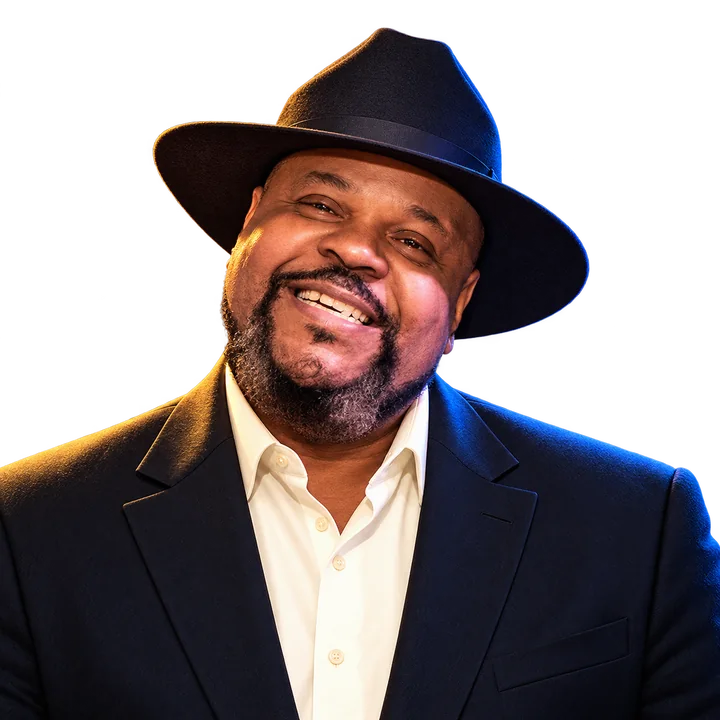
Growing up around Jimmy Reed
Jimi ‘Primetime’ Smith grew up in a Chicago household closely connected to the blues. His mother, drummer, singer, and songwriter Johnnie Mae Dunson, worked with Jimmy Reed and also managed him. Musicians were familiar presences in the home, and Reed became an early guitar teacher. Smith’s entry into music therefore involved personal contact with the people making the records, alongside the experience of hearing them. He made his first recording as a child, years before establishing himself in clubs.
Reed’s relaxed rhythmic approach remained a lasting reference. Eddie Taylor and Hubert Sumlin also helped Smith develop as a guitarist. Smith has recalled Sumlin showing him how fingerstyle playing could produce different tones and how to find his way around keys without relying on a capo. The larger lesson was to absorb an influence while retaining an individual identity. His later playing would draw on several Chicago traditions rather than treating one mentor’s vocabulary as a complete set of instructions.
As a teenager he performed with Reed at the Ann Arbor blues festival and began working in Chicago clubs. The musicians around him included Sunnyland Slim, Big Walter Horton, Jimmie Johnson, Eddie Taylor, and Fenton Robinson. Those encounters gave him experience with different kinds of singers and instrumental leaders. His own account of this period stresses the practical learning that happened onstage: fitting the guitar into a band, keeping the rhythm steady, and responding to an experienced frontman.
A long Minnesota chapter
Smith moved to Minnesota in 1979 and became part of its blues scene. He worked in a duo with Lazy Bill Lucas and played both bass and guitar with Lynwood Slim. The ability to change roles mattered in a local scene where bands reorganized and musicians moved between projects. Smith later built his own groups while remaining available to accompany visiting artists. His performing history includes Etta James, Albert King, Albert Collins, and Otis Rush.
A late-1980s trip to Germany with drummer Donald ‘Hye Pockets’ Robertson widened his touring experience. He also joined Big Walter Smith and the Groove Merchants. Big Walter became a mentor and father figure, a relationship that sometimes led listeners to assume the two men were related. They were not father and son. After Big Walter’s death, Jimi took over the band. His Minnesota career combined continuity within established groups with periods of stepping forward under his own name.
The ‘Primetime’ nickname came from a bartender’s comment on one of Smith’s suits while he was playing at Blues Alley in Minneapolis. He kept the phrase and changed the spelling of his first name to Jimi, helping distinguish him from jazz organist Jimmy Smith. The name suited a musician who regarded appearance and presentation as part of a professional show. It also gave audiences a clear identity to attach to a guitarist they might previously have seen supporting several different singers.
Leading bands and making records
As leader of the Primetime Players, Smith recorded Give Me Wings, released on Atomic Theory in 1998. Recorded live at Blues Alley, it represented the club setting in which he had developed his bandleading. His subsequent recording history includes Not 4 Sale with Hye Pockets and Malpractice by the Rhythm Doctors, a group with Paul Mayasich and Robertson. These projects reflected the relationships built during his years in Minnesota rather than a simple sequence of unrelated solo releases.
When the Rhythm Doctors ended, musicians from that group and Downright Tight came together in Famous Dave’s Allstars. The group became a house band at Famous Dave’s, playing several nights a week. Smith later resumed performances under his own name and released Back on Track. His work also included Blues in the Schools programs, bringing the music and its history to younger listeners. In 2014 he was inducted into the Minnesota Blues Hall of Fame.
In 2015 he joined Bernard Allison’s group, touring in Europe and the United States. That association offered another setting for his guitar within the work of a younger-generation bandleader with deep Chicago family connections. Smith eventually chose to move to Arizona. The decision ended his long Minnesota residence but did not cut off the musical relationships and repertoire he had developed there. His next major collaboration grew from a friendship that reached back even further, to Chicago in the 1970s.
Arizona and The World in a Jug
In Arizona, Smith reconnected with harmonica player Bob Corritore at the Rhythm Room in Phoenix. Sitting in at Corritore’s birthday celebration led to regular work together. Both musicians had known the Chicago scene before leaving the city, giving them shared references as they chose songs and developed arrangements. Smith’s guitar became a recurring part of Corritore’s performances and recording projects, including sessions with visiting singers.
The World in a Jug, released in 2023, gathered performances by Smith and Corritore from sessions made between 2017 and 2020. It placed Smith’s singing and songwriting alongside the harmonica work, with a changing cast that included Henry Gray, Fred Kaplan, Bob Stroger, Johnny Rapp, Patrick Skog, and several drummers. The repertoire included songs by Johnnie Mae Dunson, bringing his mother’s writing directly into his later recording career. The title performance and ‘We Got to Stick Together’ make that family connection audible.
The album also includes ‘You for Me,’ ‘Blinded,’ ‘In a Spin,’ ‘Walkin’,’ ‘Southbound,’ and ‘Fire and Ice.’ Its range moves from Reed-like rhythmic ease to slide-driven Chicago blues and a quieter Latin-tinged setting on ‘In a Spin.’ Reviews singled out the contrast between his strong baritone and guitar lines that leave room for Corritore. That variety matters to Smith’s identity: his connection to traditional blues includes several ways of shaping a song, from a patient shuffle to a more sustained vocal ballad.
A sound shaped by accompaniment
Smith has described a preference for instruments that feel and sound right over equipment chosen for cost or prestige. His interview accounts mention both familiar electric-guitar models and lighter amplification that made touring easier. The consistent concern is usable tone within a band. Corritore has emphasized Smith’s phrasing, individual sound, and ability to find fresh approaches to older songs. Those qualities connect the work of the experienced accompanist with the responsibilities of a frontman.
His growing visibility in the 2020s included a Living Blues cover feature in early 2023. By then, his career linked three substantial musical homes: the Chicago household where Reed and Dunson were central figures, the Minnesota clubs where he became a bandleader, and the Phoenix sessions through which his singing and guitar reached new listeners. The continuity lies in working relationships maintained over time and in a repertoire that brings early lessons into present-day performances.