

Stoneville, Greenville, and the road
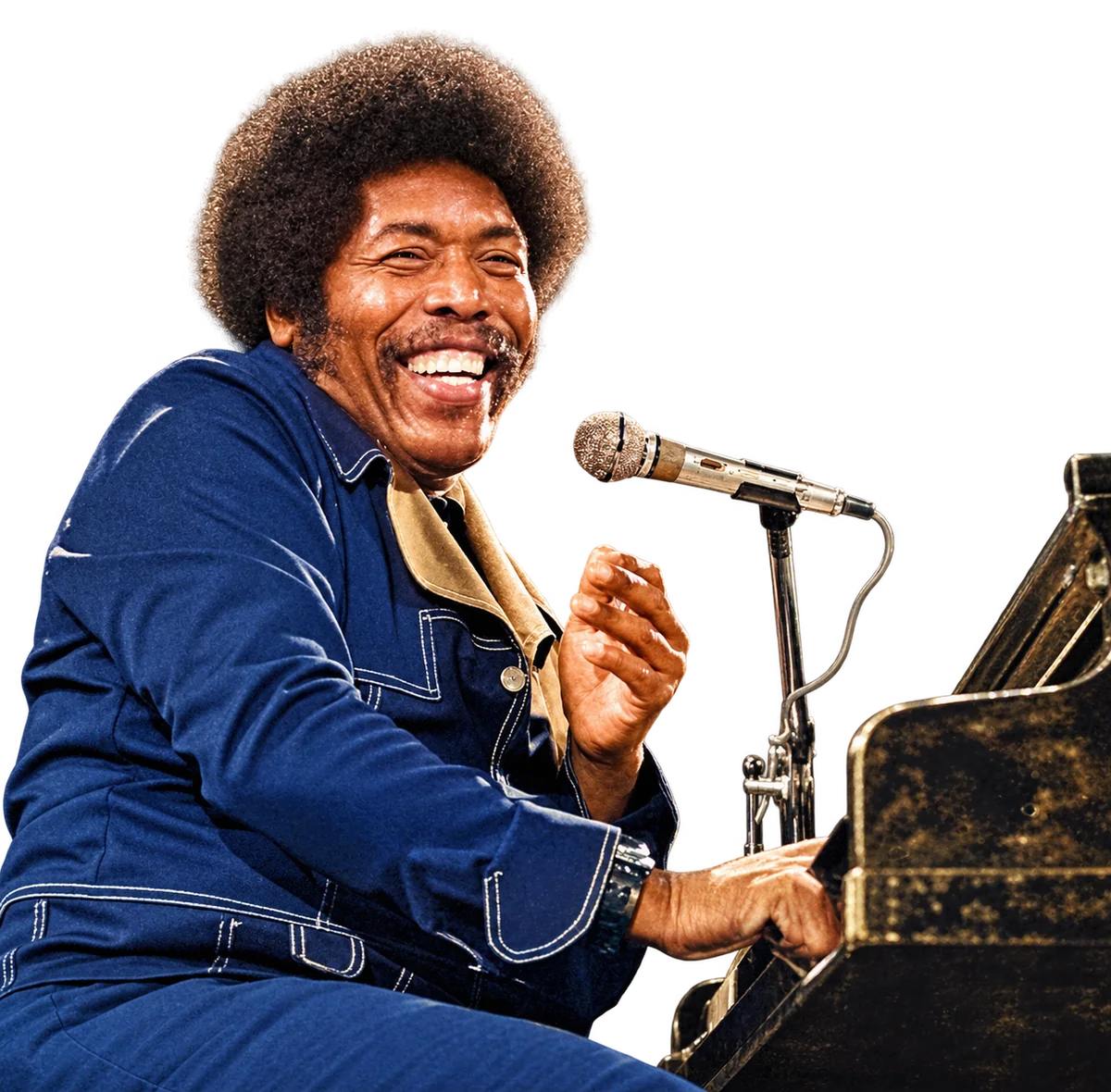
John Mayon Walker was born in Stoneville, Mississippi, on June 27, 1927, and grew up in Greenville. He learned several instruments, including church organ and guitar, before becoming best known as a pianist. The nickname Moose dated to his youth and his long hair. Over the course of his recording career he also appeared as Moose John, J.W. Walker, and Bushy Head, names that can make a single musician’s work look like several separate careers.
Walker began working professionally in the late 1940s. His early musical world included Mississippi clubs, traveling bands, and performers moving between the Delta and larger cities. He worked with Ike Turner, Sonny Boy Williamson II, and Elmore James, and appeared with musicians associated with King Biscuit Time. Military service during the Korean War interrupted that early career, after which he returned to performance and recording.
His instrumental flexibility was useful on the road. A pianist who could also play guitar or bass could fill different needs within a band, and Walker’s later Chicago work reflected that versatility. He developed the strong left hand and percussive attack that would become central to his piano identity while retaining a practical interest in whatever instrument an engagement required.
Early recordings under several names
In 1955 Walker recorded with Ike Turner in Greenville. Some of those performances appeared only much later under the J.W. Walker name. He also recorded as Moose John for Johnny Otis’s Ultra label, releasing “Talkin’ ’Bout Me.” The sessions introduced a singer and band musician whose work was already moving across regional boundaries, from Mississippi to California and eventually Chicago.
Sunnyland Slim helped bring him into Chicago’s musical orbit. There he played behind Earl Hooker, Ricky Allen, and other performers, and continued working with Elmore James. Sessions for Bobby Robinson’s Fire operation included Walker singing material that was later issued in ways that obscured his identity. “Footrace to a Resting Place” and “Second Fiddle Man” belong to this part of his recording history.
The Age and The Blues labels provided further opportunities. His early-1960s instrumentals with Hooker included “The Bright Sound” and “Off the Hook.” Later work with slide guitarist Freddie Roulette produced another setting for “Rambling Woman” and “Footrace to a Resting Place.” These records placed his keyboard and vocal personality beside strong guitar voices, a relationship that would remain characteristic of his work.
Earl Hooker and the Bluesway recordings
Earl Hooker was Walker’s closest musical partner. Their shared engagements and road trips formed a long working relationship, and Walker’s piano and organ were well suited to Hooker’s changing guitar textures. The partnership was especially productive during the Bluesway sessions of 1969, when a group of associated musicians recorded several albums in a short period.
Walker played on Hooker’s Don’t Have to Worry and John Lee Hooker’s If You Miss ’Im… I Got ’Im. He also contributed to Andrew Odom’s Farther on Down the Road. Producer Ed Michel then recorded Walker as a leader for the album generally known as Ramblin’ Woman. Earl Hooker supplied guitar, while Walker moved between piano, organ, and singing.
The album brought together roles that his singles and accompanying jobs had often separated. He could lead a song, establish a keyboard groove, and interact with a guitarist who knew his playing intimately. After Hooker’s death in 1970, Walker continued with other Chicago bands, including those of Jimmy Dawkins, Mighty Joe Young, and Louis Myers. The change in partners did not remove the band-centered character of his musicianship.
Chicago sessions and Living Chicago Blues
Walker’s recording work in the 1970s included Mighty Joe Young’s Blues with a Touch of Soul, Junior Wells’s On Tap, and Otis Rush’s Cold Day in Hell. The settings varied from Wells’s club-derived ensemble sound to Rush’s guitar-led arrangements. Walker could provide piano or organ according to the music, supporting the singer while adding the rhythmic weight and keyboard color for which other musicians hired him.
He joined Eddie Shaw’s Wolf Gang in time for the band’s participation in Alligator’s Living Chicago Blues project. Bruce Iglauer also offered Walker a session of his own. With Louis Myers on guitar, he recorded “Would You Baby,” “Worry Worry,” “Sunnyland Blues,” and “Cry Cry Darling.” The selections gave him a visible place as a leader within the same series that presented other working Chicago groups.
His left hand was a substantial part of that sound, capable of supplying enough bass movement to make a separate bass instrument less prominent. He also worked in small settings, sometimes with drummer Chris Moss, and appeared between band sets at Kingston Mines. The scale could change considerably while the physical force and rhythmic clarity of his piano remained recognizable.
Walker’s work also reached Earwig through Big Leon Brooks’s Let’s Go to Town, on which he plays piano on two selections. The credit places him in another harmonica-led setting, distinct from his long partnership with Earl Hooker and from his own vocal records. Across these sessions, the piano’s role could change from a conspicuous rhythmic engine to a more contained supporting voice. His willingness to move among those responsibilities helps explain the number and variety of Chicago bandleaders who continued to use his playing.
European albums and a later influence
Walker recorded Going Home Tomorrow in Paris during a 1979 Chicago Blues Festival tour, with Didier Tricard producing. The program included “All My Love,” “Eyesight to the Blind,” and “Moose on the Loose Boogie.” European touring also produced solo-piano recordings, placing a different emphasis on the relationship between his two hands and on his ability to sustain a complete performance without a band.
Blue Love followed in 1984 for Erwin Helfer’s Red Beans label and was later reissued by Evidence with additional material. Another late recording, Swear to Tell the Truth, brought him together with Lefty Dizz and Harmonica Hinds. He also performed with those musicians at Burnley in England in 1991. His working relationships continued across generations and across the different national markets that supported Chicago blues.
A series of strokes eventually left Walker unable to perform. He spent his final years in a Chicago nursing home and died on November 27, 1999. His music continued through reissues and through younger pianists who had known him. Barrelhouse Chuck paid tribute with “The Bright Sounds of Big Moose” on organ, preserving a part of Walker’s identity that could be overlooked when he was remembered only as a forceful pianist. His career joined vocal records, organ features, solo piano, and decades of accompaniment into one unusually varied body of work.