
Finding the bass
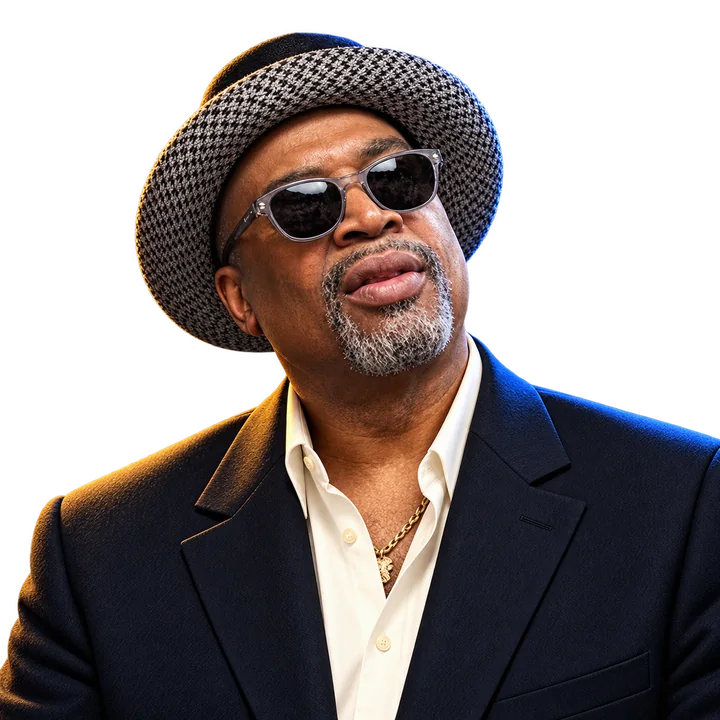
Melvin Smith began playing music as a child, learning basic guitar from a friend’s father along with other neighborhood youngsters. His route to bass passed through drums and guitar. In a group that lacked a bassist, he found himself playing bass lines on the guitar; eventually he acquired the instrument suited to the job. He has described bass playing as a more comfortable musical role, one in which he could relax and concentrate on the movement of the band.
His early interests included jazz, rhythm and blues, and gospel. Bassists Rufus Reid, Alphonso Johnson, and Stanley Clarke became important listening references. Those influences did not mean treating every job as an opportunity to display the same vocabulary. Smith recalled a rehearsal with Dion Payton where a jazz-inflected run prompted a correction: the band was playing blues, and its phrasing needed to reflect that. The experience sharpened his attention to the distinct musical language a bandleader wanted.
Chicago bands and professional responsibility
Smith’s Chicago work has included Lefty Dizz, Billy Branch, Deitra Farr, Zora Young, Koko Taylor, John Primer, and Lurrie Bell. Each association required learning a singer’s repertoire and habits. In his 2015 Blues Blast interview, Smith described preparing for the artist rather than bringing a fixed part to every performance. His résumé also includes Carl Weathersby, Jimmy Johnson, Phil Guy, Melvin Taylor, Charlie Love, and Jimmy Burns, reflecting a career spread across the city’s overlapping blues bands.
As Zora Young’s bandleader, he had responsibilities beyond playing bass. When an opportunity arose to join the Legendary Blues Band, he chose to remain with Young. Instead, he recommended Nick Moss, who was then working as a bassist. Smith later recalled Moss’s appreciation for the referral. The episode places him inside the practical network through which musicians found reliable colleagues: a vacancy was filled by somebody who understood both the music and the demands of the road.
With Koko Taylor, Smith combined bass playing with tour management. He credited Taylor with reinforcing the obligation to give a complete performance regardless of the circumstances. Management work meant helping a band function away from home as well as making it sound right onstage. When he later took on comparable responsibilities for Lurrie Bell, he brought that experience with him. His career has depended on this combination of musical preparation and the organizational work that audiences rarely see.
A recurring partner in Willie Hayes
One of Smith’s important musical relationships was with drummer Willie ‘The Touch’ Hayes. They had played together since their work with Lefty Dizz and later reunited in other bands. Smith spoke warmly about several drummers, but Hayes supplied an especially familiar partner. In discussing their playing, he emphasized mutual attention and the overall group sound. A drummer concentrating on personal display could make the bassist’s job harder; with Hayes, Smith felt that both were serving the same ensemble.
Their partnership is heard on Lurrie Bell’s Blues in My Soul, released by Delmark in 2013. Bell led on guitar and vocals, with Roosevelt Purifoy on keyboards and Matthew Skoller on harmonica. Producer Dick Shurman worked with musicians who already knew how to accompany Bell in Chicago. The record consequently brought a functioning band into the studio. Smith and Hayes supplied continuity beneath Bell’s sharply articulated guitar phrases and the additional responses from harmonica and piano.
Records with Bell, Lewis, and Taylor
Smith returned with the same central group for Bell’s Can’t Shake This Feeling in 2016. Its thirteen songs mixed Bell originals with material associated with T-Bone Walker, Little Milton, Willie Dixon, and Carey Bell. ‘This Worrisome Feeling in My Heart’ and ‘Faith and Music’ placed the singer’s personal concerns alongside established repertoire. For the rhythm section, that range meant supporting both familiar forms and the specific pace of a new song. Contemporary reviews singled out Smith and Hayes as an important part of the album’s cohesion.
His Delmark work also includes Sharon Lewis and Texas Fire’s The Real Deal, released in 2011. Lewis’s material combined blues with soul and gospel influences. On the title performance, Smith worked with drummer Tony Dale, guitarist Bruce James, keyboardist Roosevelt Purifoy, and a horn section. That larger arrangement offered a different setting from Bell’s compact band. The bass was part of a fuller ensemble, supporting a singer whose repertoire extended to songs such as ‘Crazy Love’ and ‘Ain’t No Sunshine.’
Demetria Taylor’s 2011 debut Bad Girl supplies another recording connection. Delmark’s later Women’s History Month compilation credits Smith on the title selection, linking him with a singer from a younger generation of Chicago’s Taylor family. These recordings show the range of voices he has accompanied within one label’s catalog. The work involves distinct singers, bands, and rhythm partners, even when the shared setting is the contemporary Chicago blues studio.
Touring, leadership, and musical exchange
Smith’s work with John Primer took him to Brazil, where he had the chance to meet Stanley Clarke, one of the bassists he had admired. His European appearances also developed into performances under his own name. By 2015 he was assembling revue-style groups for festivals in countries including France, Spain, and Belgium, inviting bandleaders to share the program. That format let a musician usually positioned in the rhythm section take responsibility for the overall presentation while retaining a collaborative approach.
Education formed another part of his work through Billy Branch’s Blues in the Schools program. Smith regarded introducing young audiences to the music as essential to its future. His own account resisted the idea that blues was inherently depressing: the performances he knew could be communal, entertaining occasions. The same outlook informs his standards as an accompanist. Whether playing a small club, church, studio session, or international festival, he has described the obligation as giving the setting and the people in it his full effort.
The Delmark All-Stars
Smith later joined the Delmark All-Stars behind Willie Buck on Live at Buddy Guy’s Legends, released in 2024. The lineup reunited him with Hayes and added guitarists Billy Flynn and Thaddeus Krolicki, pianist Johnny Iguana, and harmonica player Scott Dirks. It connected his studio experience with another Chicago singer to the live club setting where much of his career had unfolded. The 2025 National Folk Festival roster also identified him in John Primer’s Real Deal Blues Band, continuing his work within an active touring ensemble.