


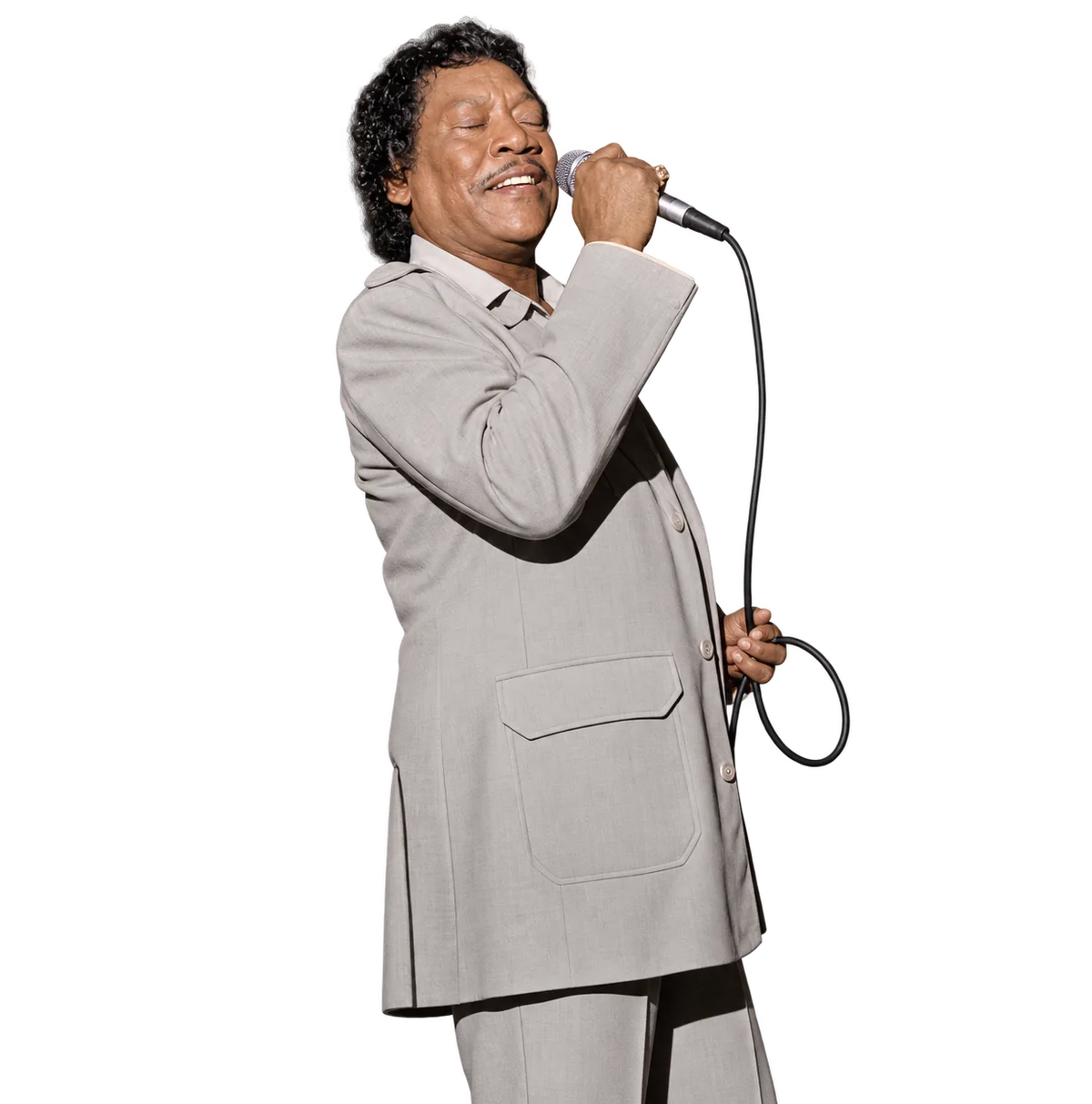
From Rosemark to the Memphis music world
Bobby “Blue” Bland was born Robert Calvin Brooks on January 27, 1930, and grew up around Rosemark, Tennessee, near Memphis. Gospel singing formed an important part of his early musical life. After moving to Memphis as a teenager, he sang with the Miniatures and became involved with musicians pursuing secular careers around Beale Street. The circle later known as the Beale Streeters included B.B. King, Johnny Ace, Rosco Gordon and Earl Forrest. Bland’s place among them rested principally on his voice rather than an instrumental specialty.
That voice did not arrive on record in its mature form all at once. Early recording opportunities and local performances preceded the sustained success of his Duke years. Army service beginning in 1953 interrupted his progress; when he returned in 1955, the business around him had changed, and Don Robey controlled Duke. Bland gradually developed the confidence and interpretive range that made his later recordings distinctive. He could draw on gospel intensity without turning every song into a shout, and he could approach the conversational intimacy of a popular ballad while retaining the rough edges of a blues singer.
Duke, Joe Scott and the breakthrough records
“Farther Up the Road” gave Bland his breakthrough in 1957. Its firm blues foundation and urgent singing were followed by the more inward drama of “Little Boy Blue.” The change was significant: his music could begin as a private confession, then rise toward a level of emotional pressure associated with gospel. He made the movement between restraint and release part of his identity. The listener heard someone trying to remain composed while the situation described in the song threatened that composure.
Bandleader and arranger Joe Scott helped shape the recorded setting. Horns could frame a vocal entrance, answer a line or heighten a climax without covering the singer. Wayne Bennett’s guitar supplied another essential voice, combining clean articulation with a strongly felt blues vocabulary. “I’ll Take Care of You,” “Lead Me On,” “I Pity the Fool” and “Turn On Your Love Light” established different possibilities within the same developing style. Bland could be reassuring, accusatory, pleading or jubilant. His guttural vocal punctuation, sometimes called his chicken-bone sound, became a recognizable signature, but its impact depended on contrast with the smoother lines around it. The arrangement and the delivery worked together to give each emotional turn a clear shape.
Two Steps from the Blues and the 1960s repertoire
Two Steps from the Blues, released in 1961, gathered recordings that made Bland’s musical identity unusually clear. The title song, “Cry, Cry, Cry,” “I’m Not Ashamed,” “I Pity the Fool” and “Lead Me On” offered a succession of sharply drawn emotional situations. The album could move between an exposed ballad and a more forceful number while keeping the singer at its center. Its success as a complete listening experience helped carry music originally shaped for singles into an enduring album repertoire.
Further Duke releases, including Here’s the Man!!! and Call on Me, extended that work. His version of T-Bone Walker’s “Stormy Monday” became especially important, with Bennett’s guitar contributing an introduction and accompanying language that other players studied closely. “That’s the Way Love Is” and “Ain’t Nothing You Can Do” supplied further signature material. Across these records, Bland’s singing made vulnerability compatible with authority. The characters could admit humiliation or dependence without sounding musically passive. His phrasing gave a familiar romantic predicament a particular speaker, and the disciplined band allowed him to stretch the feeling without losing the song’s momentum. That balance became a foundation for later soul-blues singers.
California albums and performances with B.B. King
Bland’s recording circumstances changed during the 1970s as his catalog moved into the ABC-Dunhill orbit. Producer Steve Barri helped develop a new album setting, with material and arrangements that addressed contemporary listeners while preserving the expressive grain of Bland’s voice. His California Album in 1973 and Dreamer in 1974 became important releases of this phase. They were more polished than the earlier Duke recordings, but their appeal still depended on a singer able to suggest uncertainty, fatigue and desire within a controlled performance.
The change of surroundings brought out a different kind of intimacy. On Dreamer, the smooth studio surfaces made the tension in the voice especially noticeable: comfort and dissatisfaction could exist within the same song. The album’s “Ain’t No Love in the Heart of the City” became one of his lasting recordings. His long friendship and professional association with B.B. King also reached a large audience through their jointly credited live albums. Together for the First Time… Live, released in 1974, allowed the two men to exchange lines and musical responses in public. The partnership worked through their differences as much as their shared Memphis history, with King’s guitar providing a counterpart to Bland’s concentration on singing.
Malaco, southern audiences and the final years
Members Only, released in 1985, began Bland’s long relationship with Malaco. Larry Addison wrote the title song, which became a central number in the later part of his career. The label offered a setting closely connected with the southern soul-blues audience that had remained essential to his success. Albums including Midnight Run, Portrait of the Blues, Memphis Monday Morning and Blues at Midnight kept him recording through changing fashions elsewhere in popular music.
Live on Beale Street, released as a performance film in 2002, brought his later stage presence back to the Memphis setting that had nurtured his early ambitions. In 2013, Tennessee honored him with its Governor’s Distinguished Artist Award. The recognition connected an international recording career with the home audience and regional musical culture that had continued to sustain it.
His voice grew heavier with age, but he continued using texture, pauses and a carefully placed rise in intensity to make a song his own. He remained a touring presence on blues and soul-blues revues until illness curtailed his work in 2013. He died in Memphis on June 23 that year. Honors included induction into the Blues Hall of Fame in 1981, the Rock & Roll Hall of Fame in 1992 and a Grammy Lifetime Achievement Award in 1997. Those recognitions followed decades of support from Black audiences who had made his songs part of their own social and emotional lives. His influence reaches through blues, soul and R&B, particularly in the art of letting a polished arrangement carry a singer whose voice still sounds personally exposed. The records reward attention to a single syllable as readily as to a full dramatic climax.