

Singing in Clarendon
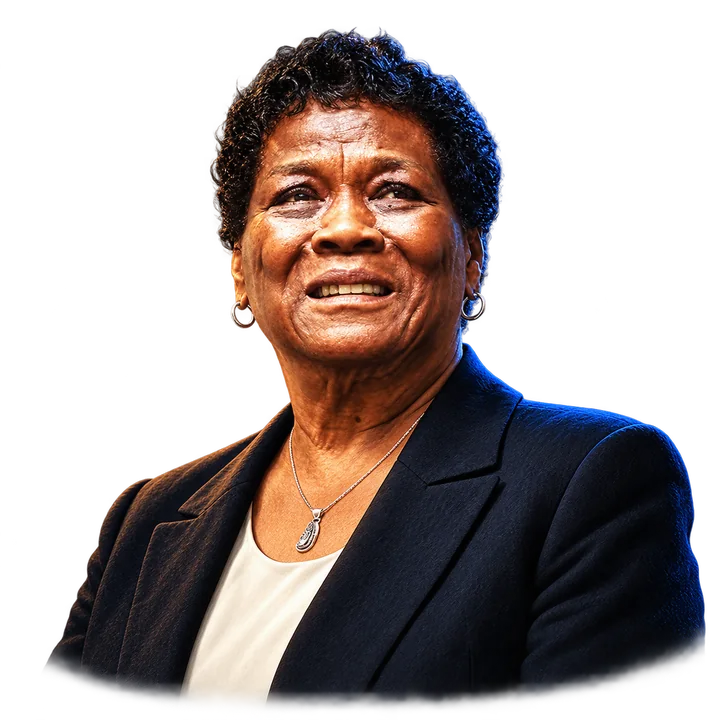
Mary Lane was born in Clarendon, Arkansas, on November 23, 1935. She grew up with church music and with the blues sung by people working in cotton fields. In later interviews she remembered being encouraged to sing for the workers, an experience that helped turn a child’s enthusiasm into confidence before an audience. Her first musical world was local and participatory, with singing woven into work, family, and social life.
As a teenager she began performing with Robert Nighthawk. She also encountered musicians including Howlin’ Wolf, Little Junior Parker, and James Cotton in the Arkansas juke-joint circuit. Those experiences gave her an early understanding of how a singer works with a band and responds to a room. She learned through performance, developing an approach in which feeling and the ability to shape a line mattered more than formal preparation.
Moving north and finding a Chicago audience
Lane moved to Chicago in 1957, joining the movement of Southern musicians and families that transformed the city’s musical life. There she resumed contact with Wolf and sang in clubs alongside performers whose roots were similarly Southern. She recalled the encouragement of hearing Jimmy Reed and Elmore James and the sense of being among people who shared a musical language.
Wolf also warned her about the difficulties of the business and the possibility that others would take advantage of an inexperienced performer. Lane’s later career bore out how hard recognition could be to secure. She remained respected among musicians and local listeners while receiving relatively few recording opportunities. Regular performance and the ability to hold an audience sustained a career that did not follow the conventional path of frequent album releases.
Morris Pejoe accompanied her early Chicago recording, “You Don’t Want My Lovin’ No More,” issued by Friendly Five in 1964. The single gave her a presence on record without producing a sustained recording career. She continued working through the city’s clubs, including its West Side circuit, where a singer could become widely known to a local audience without becoming a familiar name nationally.
Bands, travel, and Appointment with the Blues
Lane’s engagements included Theresa’s Lounge, where she recalled performing with Junior Wells. She also sang with Mississippi Heat, extending her work beyond her own immediate circle. Travel brought performances in Canada and France; in an interview she remembered a lengthy Paris visit with Jimmy Johnson and a Canadian trip with Mississippi Heat. An aversion to flying, however, made the touring life difficult and limited the opportunities she was willing to pursue.
Appointment with the Blues arrived on Noir in 1997, when she was already in her sixties. Recorded at Twist Turner’s House of Sound in Chicago, it featured guitarist Johnny B. Moore, pianist Detroit Junior, and bassist Jeffrey Labon, her husband. The repertoire included “Love Me Baby,” “Leave Me Alone,” “Strong Love,” and a return to “You Don’t Want My Loving No More.” The album brought her voice into a fuller recorded setting after decades of club performances.
Its musicians belonged to the same working environment that had shaped her singing. Rather than surrounding her with an unfamiliar production concept, the record allowed her to work with players who understood Chicago blues accompaniment. It also preserved a repertoire that connected her earliest single to the songs she was singing later in life. The gap before another studio album would be more than twenty years.
Travelin’ Woman and a different recording opportunity
Producer Jim Tullio worked with Lane on Travelin’ Woman, released in March 2019 by the newly established Women of the Blues Records. The process took nearly two years. Tullio developed musical settings while Lane supplied lyrics rooted in her experiences and concerns. She wanted songs that reached listeners directly, and she was candid that she also hoped the album would improve her income.
The ten tracks moved among different moods and kinds of accompaniment. “Leave That Wine Alone” addressed a partner’s drinking; “Ain’t Nobody Else” included Billy Branch’s harmonica; and Corky Siegel contributed to “Some People Say I’m Crazy.” The title song traced a life of movement, supported by horns including Gene “Daddy G” Barge. Dave Specter played on “Bad Luck and Trouble,” while Eddie Shaw contributed harmonica to “Ain’t Gonna Cry No More.”
“Make Up Your Mind” closed the album with Colin Linden on acoustic dobro, reducing the accompaniment and leaving the voice exposed. That contrast with the larger arrangements emphasized Lane’s ability to communicate through a phrase rather than through sheer vocal force. Across the record, relationship songs and reflections on a traveling life retained the directness of her club work while receiving more varied instrumental settings.
The album’s rhythm and keyboard parts were also carefully varied. Larry Beers and Tullio supplied the rhythmic foundation for “Leave That Wine Alone,” with Phil Miller adding slide guitar. Chris “Hambone” Cameron played Hammond organ and piano on “Let Me Into Your Heart,” while Johnny Grey’s piano helped drive “Some People Say I’m Crazy.” Those changes in accompaniment allowed Lane to move between warning, persuasion, and defiance, keeping the character of each lyric distinct within an album built around her voice.
A film, recognition, and the meaning of the songs
Jesseca Ynez Simmons’s film I Can Only Be Mary Lane brought further attention to Lane’s life and the making of her second album. The filmmaker initially approached the West Side blues scene more broadly before focusing on Lane. The film premiered around the singer’s eighty-third birthday in 2018, adding a visual and personal account to music that had long circulated mostly through local performances.
National radio coverage followed the album in 2019. In her NPR interview, Lane returned repeatedly to the importance of feeling the music and drawing songs from lived experience. She described spontaneous songwriting and an instinctive response to accompaniment. Her phrasing depends on hearing what a band gives her and finding language and emphasis that make the story persuasive in the moment.
A 2022 WTTW profile found her performing less frequently but still closely identified with singing. It reported honors including a Koko Taylor Lifetime Achievement Award and a day proclaimed for her in Chicago. Birthday concerts with the No Static Blues Band at Buddy Guy’s Legends remained a focus of her performing life. The later recognition did not change the basis of her work: a singer shaped by Arkansas and Chicago, attentive to the emotional meaning of a song and to the musicians helping her deliver it.